June 24, 2026
8 Best Print on Demand Services for Authors (2026)
2026 comparison of print on demand services—KDP, IngramSpark, Lulu, BookVault. Get real pricing, royalties, and a hybrid strategy. Start here.
TL;DR
The print on demand market for books is projected to reach $15.5 billion by 2033, and choosing the wrong platform can cost you thousands in lost royalties. Amazon KDP Print offers the lowest per-unit cost (around $3.40 for a 200-page paperback) and dominates with 80%+ market share. IngramSpark gives you access to 40,000+ retailers but raised fees in February 2026. The smartest approach is a hybrid strategy using multiple platforms simultaneously. This guide compares eight print on demand services on real pricing math, royalty structures, and honest user feedback so you can pick the right stack for your book.
At-a-Glance Comparison Table
| Service | Setup Cost | Print Cost (200-pg B&W PB) | Royalty Rate | Distribution Reach | Hardcover? | Best For |
|---|---|---|---|---|---|---|
| Amazon KDP Print | $0 | ~$3.40 | 60% of list minus print cost | Amazon only (expanded available) | Yes (limited) | Maximum Amazon visibility |
| IngramSpark | $0 | ~$4.50+ | Wholesale discount model | 40,000+ retailers worldwide | Yes | Bookstore and library distribution |
| Draft2Digital Print | $0 | Varies | ~45% of list minus print cost | Wide (multiple retailers) | No | Authors already distributing ebooks wide |
| Lulu | $0 | ~$4.50+ | 80% after deductions | Lulu Bookstore + retail partners | Yes | Direct-to-consumer and specialty formats |
| BookBaby | $2,190+ | ~$12 (25-copy order) | Varies by channel | Wide via IngramSpark | Yes | Full-service hand-holding |
| Blurb | $0 | ~$13.03 | 100% of profits (Blurb store) | Blurb Bookstore + Amazon | Yes | Photo books and visual content |
| Barnes & Noble Press | $0 | Free (no production fees to author) | 55% of list minus print cost | Barnes & Noble only | Yes (premium linen) | Premium hardcovers and B&N audience |
| BookVault | £19.95 | ~$4.01 (US printing) | 100% on self-distributed sales | Self-distributed via Shopify/Woo | Yes | Shopify-powered direct sales |
What Is Print on Demand?
Print on demand means your book is printed only when a reader orders it, one copy at a time, shipped directly to them. There’s no warehouse full of boxes, no minimum order of 500 copies gathering dust in your garage, and no upfront print run costs.
This model has transformed self-publishing. You can list a book for sale, make changes to the interior or cover at any time, and never risk a dollar on unsold inventory. The print-on-demand book market reached $6.8 billion in 2024 and is projected to grow to $15.5 billion by 2033. Over one million authors now publish through Amazon KDP alone.
But “print on demand” is just the printing and distribution layer. The total cost to self-publish includes editing, cover design, formatting, ISBNs, and marketing. Choosing the right POD platform is one piece of a larger puzzle.
How We Evaluated These Services
Every platform in this guide was assessed across seven dimensions:
- Setup cost: Is it free to start, or do you pay upfront?
- Per-unit print cost: What does a standard 200-page black-and-white paperback actually cost to produce?
- Royalty rate: What percentage of the list price do you keep after printing and distribution fees?
- Distribution network: Can you reach Amazon only, or bookstores, libraries, and international retailers?
- Format options: Paperback only, or hardcover, color, and specialty formats?
- Ease of use: How steep is the learning curve?
- User sentiment: What are real authors saying on Trustpilot, forums, and communities?
We also prioritized freshness. Several competing guides haven’t accounted for IngramSpark’s February 2026 pricing changes or Draft2Digital’s ongoing user complaints. This guide reflects those developments.
The 8 Best Print on Demand Services for Books
1. Amazon KDP Print
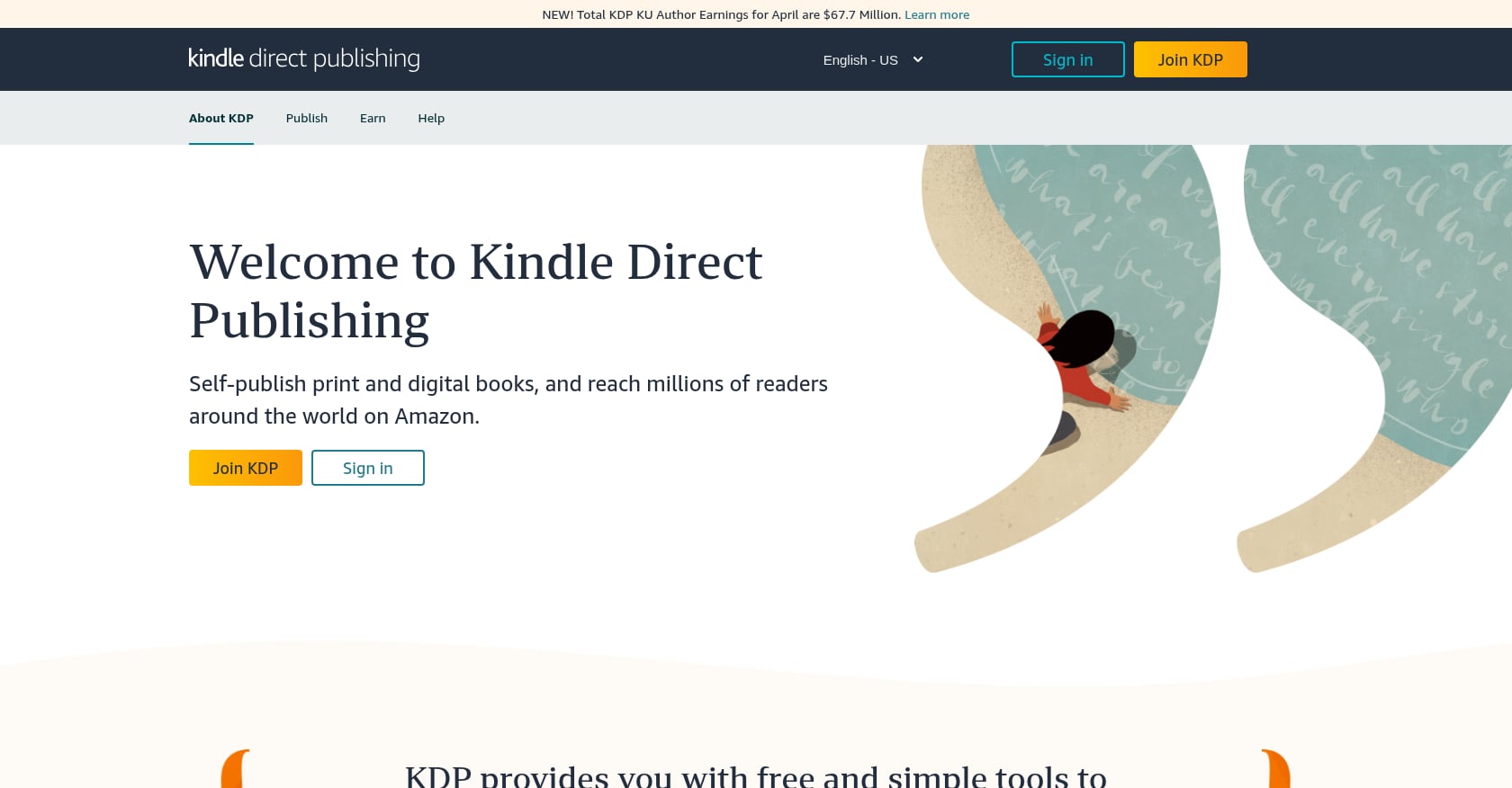
Best for: Maximum Amazon visibility and lowest per-unit printing cost.
Amazon KDP Print dominates print on demand services for books. With over 80% of the self-published book market, it’s where most readers are already shopping. Setup is completely free, and per-unit costs are the lowest in the industry.
Pricing breakdown:
A 200-page black-and-white paperback on Amazon.com costs approximately $1.00 + (200 × $0.012) = $3.40 to print. A 200-page premium color paperback runs $1.00 + (200 × $0.065) = $14.00. No setup fees, no monthly charges.
Royalties:
Paperback and hardcover royalties are 60% of the list price minus the printing cost. Expanded distribution drops that to 40%. One detail most guides skip: pricing your book at $9.98 instead of $9.99 isn’t a one-cent difference. It’s the difference between 60% and 50% royalties on every sale, forever.
Key features:
- Free to publish with no hidden fees
- Fastest path to Amazon search visibility
- Hardcover printing available (introduced 2021, currently for 6×9" trim)
- Direct integration with Kindle ebook listings
- Real-time sales reporting through the KDP dashboard
Limitations:
- Limited paper stock and trim size options compared to IngramSpark
- No meaningful distribution to physical bookstores outside the Expanded Distribution program
- Hardcover availability restricted to specific trim sizes
- Cover and interior file requirements can reject non-compliant uploads
One Substack author captured the experience well: “It’s really easy to self-publish through Amazon KDP, and I love that they do print on demand paperbacks. The hardest part is the marketing, of course!”
That marketing challenge is real. POD printing gets your book listed, but it doesn’t sell copies. If you’re looking for help with Amazon ads and campaigns, that’s a separate investment worth planning for.
For a detailed walkthrough of the upload process, formatting specs, and common mistakes, see our step-by-step KDP guide.
2. IngramSpark
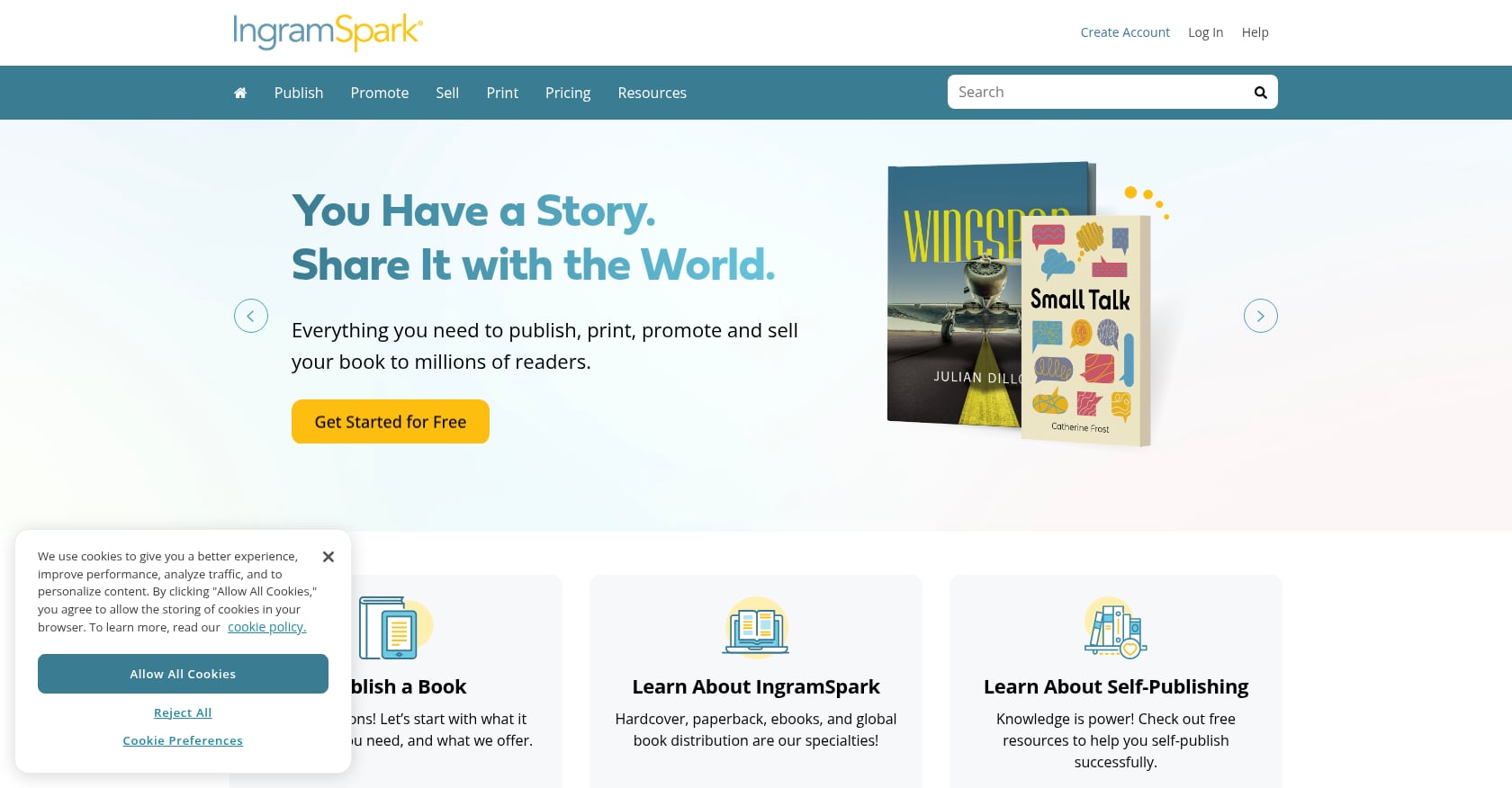
Best for: Authors focused on getting stocked in brick-and-mortar bookstores and libraries.
IngramSpark connects your book to one of the biggest wholesale distributors in the world. Ingram is trusted by bookstores globally. Publishing with them doesn’t guarantee shelf placement, but it gives you a real chance, something KDP simply can’t offer.
2026 pricing update:
As of February 1, 2026, IngramSpark increased pricing in two ways. The market access fee rose from 1.5% to 1.875%. For a $15 list-price book, that fee jumped from 22.5 cents to 28.1 cents per unit. Color jacketed hardcovers saw consistent increases of 20 to 30 cents per unit.
The trade-off? IngramSpark announced free, unlimited revisions. Previously, they had eliminated the $49 upload fee but kept a $25 update fee in place. That update fee is now gone, which is a significant savings for authors who iterate on their interiors.
Key features:
- Distribution to 40,000+ retailers, libraries, and online stores worldwide
- Widest selection of trim sizes, paper stocks, and binding options
- Returnability settings that make bookstores more willing to stock your title
- Hardcover, paperback, and jacketed case laminate formats
Limitations:
- The interface is notoriously complex and far less intuitive than KDP
- Customer support is often automated, with slow response times
- IngramSpark has a 3.1 rating from 1,447 reviews on Trustpilot
- The wholesale discount model means lower per-unit margins than KDP for Amazon sales
The ISBN situation matters here too. IngramSpark requires your own ISBN, which means you need to purchase one from Bowker or your national agency. Our ISBN setup guide walks through the process and explains why owning your ISBN gives you more control.
3. Draft2Digital Print
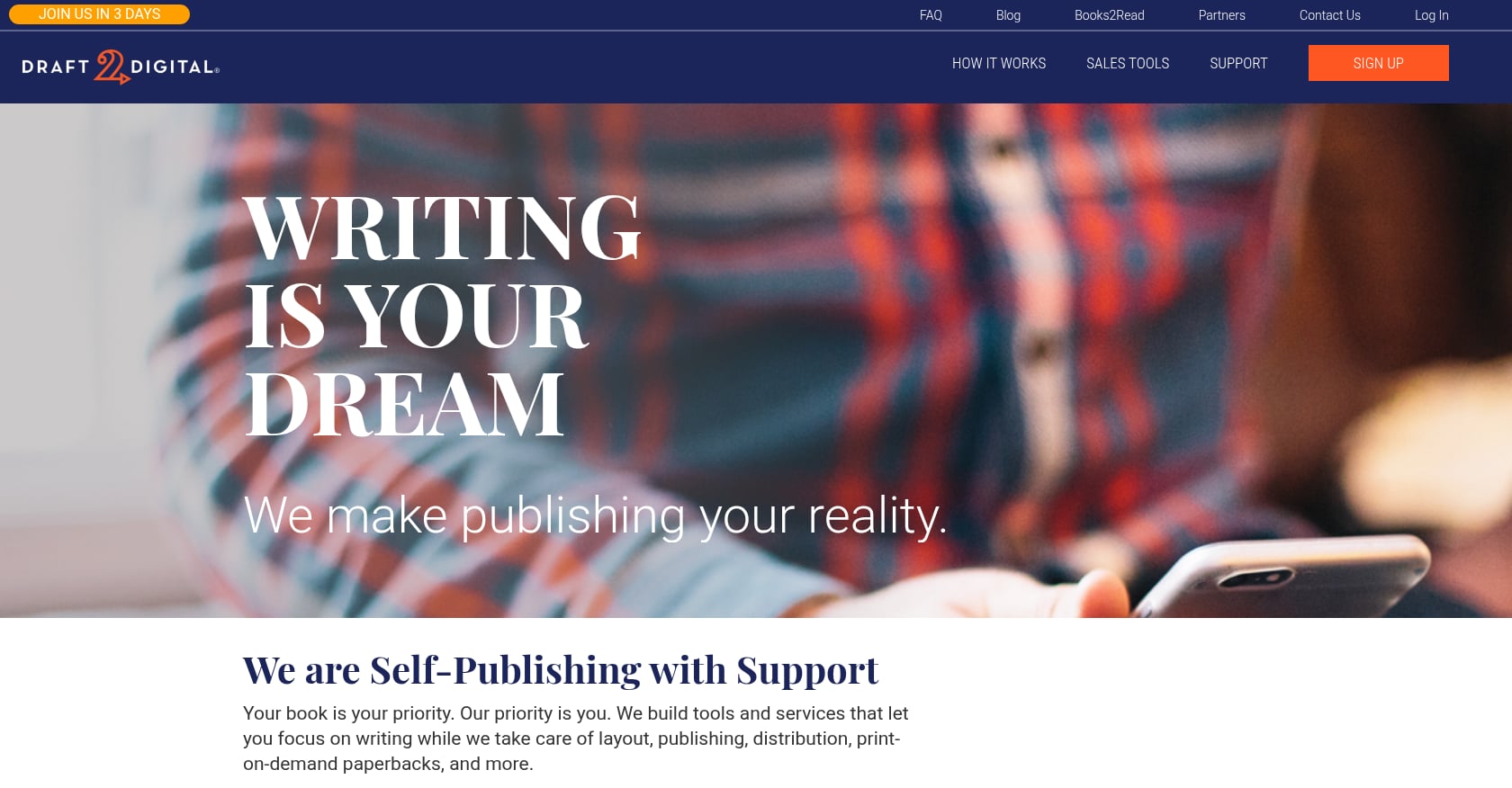
Best for: Authors already distributing ebooks wide who want to add print as a secondary format.
Draft2Digital (D2D) built its reputation on ebook distribution, and its print on demand service is a natural extension. The company charges no fees for formatting or uploading. When you submit your manuscript and cover art, they generate a working table of contents and page breaks automatically.
Pricing and royalties:
D2D takes approximately 10% of your retail price per sale. Print book authors keep about 45% of the list price minus printing costs. Free ISBNs are included, along with a free content change every 90 days.
Key features:
- Zero setup costs and no formatting fees
- Free ISBN provided
- Automatic ebook formatting tools that extend to print
- Single dashboard for both ebook and print distribution
Limitations:
- Only offers paperbacks (no hardcover option)
- The free ISBN means D2D is listed as the publisher of record, and you cannot use that ISBN on other platforms
- Print quality and trim options are more limited than IngramSpark or KDP
- Newer to print, so the service is still maturing
A warning worth reading:
Trustpilot reviews reveal a pattern of account termination complaints that other guides tend to gloss over. Some users describe it as “the worst self publishing platform” after having accounts terminated for alleged “low content” violations. One reviewer reported: “After four years of publishing with them, they terminated my account, stole my royalties.” These reports don’t represent every user’s experience, but they’re frequent enough to warrant caution, especially if you publish journals, notebooks, or other low-text formats.
4. Lulu
Best for: Direct-to-consumer sales and specialty print formats.
Lulu operates on a free-to-publish model and has been in the POD space longer than most competitors. Its standout strength is direct sales flexibility: you can sell through the Lulu Bookstore or plug directly into your own website with Lulu Direct.
Pricing and royalties:
Publishing on Lulu costs $0 upfront. From the revenue remaining after any retail discount and the print cost, Lulu keeps 20% and you keep 80%. That sounds generous, but practitioners report the math often works against you. Steep distribution fees for retail channels force many authors to either price books unreasonably high or accept near-zero royalties on distributed sales.
Key features:
- Free to publish with no hidden setup charges
- Excellent print quality, particularly for paperbacks (multiple reviewers rate Lulu proofs higher than KDP)
- Strong direct sales tools and integrations
- Wide format selection including comic books, photo books, and calendars
Limitations:
- Distribution royalties are poor once Lulu’s cut and retail discounts stack up
- The 80/20 split sounds good until you factor in wholesale pricing requirements
- Hardcover color output tends to come out more muted than expected
- Less visibility than Amazon or IngramSpark for organic book discovery
Reedsy’s assessment captures it well: Lulu Press is a reasonable choice if your goal is to order high-quality print copies, but its steep distribution fees and poor royalty structure will likely work against you for a profitable publishing business.
5. BookBaby
Best for: First-time authors who want full-service hand-holding and have the budget for it.
BookBaby bundles print on demand services with cover design, ebook conversion, ISBNs, and distribution into packaged tiers. Their mid-level option runs $2,190 and includes basic cover design, ebook conversion, 25 print books, two ISBNs, plus ebook and print on demand distribution. Editing is not included at any tier.
The per-unit math that matters:
BookBaby’s printing costs are dramatically higher than alternatives. A 200-page paperback runs roughly $12 per unit for a 25-copy order, compared to approximately $3.25 on KDP Print. That’s nearly four times the cost.
Scale it out: two books through BookBaby costs $4,380. Two books published DIY costs $860 to $1,260. The difference buys a professional editor for your next manuscript.
Key features:
- All-in-one packages for authors who don’t want to manage multiple vendors
- Distribution through IngramSpark’s network
- 4.5/5 Trustpilot rating (though reviews are polarized)
- Dedicated support for formatting and upload issues
Limitations:
- Per-unit printing costs are 3-4x higher than KDP or IngramSpark
- Package pricing doesn’t include editing, the single most important investment for a new book
- Forum users are blunt about the value proposition. As one author put it: “BookBaby is expensive. I looked at them, and quickly decided to look elsewhere.”
- The convenience premium is steep for authors willing to learn the process
If you’re a first-time author weighing full-service options, our guide to publishing companies for beginners compares the broader landscape beyond just POD platforms.
6. Blurb
Best for: Photo books, graphic novels, art portfolios, and visually rich content.
Blurb occupies a niche that most print on demand services ignore: books where images matter more than text. The platform delivers outstanding print quality with sharp images, vibrant colors, and a diverse selection of paper options.
Pricing:
A 200-page paperback costs $13.03. A similar hardcover runs $26.03. A 6×9" black-and-white trade book starts at $13.03, while the color version starts at $15.55. These are the highest per-unit costs on this list, but for visual content, the quality justifies the premium.
Royalties:
100% of profits when selling through the Blurb Bookstore. No distribution fees on direct sales.
Key features:
- Best-in-class color reproduction and paper stock variety
- BookWright design software (free) for layout creation
- Distribution to Amazon available
- Ideal for coffee table books, cookbooks, photography collections, and portfolios
Limitations:
- Does not offer ebooks or audiobook options
- Customer support is online only
- Per-unit costs are the highest among major POD platforms
- Limited distribution reach compared to IngramSpark or KDP
- Not practical for standard text-heavy fiction or nonfiction
If your book is primarily visual, Blurb is the right choice. For standard novels or nonfiction, the per-unit economics don’t make sense.
7. Barnes & Noble Press
Best for: Premium hardcovers and direct access to the B&N readership.
Barnes & Noble Press is free to use from start to finish, with no delivery or production fees charged to the author. The standout feature is premium hardcover quality. You can create linen-wrapped hardcover books complete with a real, removable, full-color dust jacket. That’s a level of finish most POD platforms can’t match.
Royalties:
Ebooks earn a flat 70% royalty on titles priced $0.99 or higher. Print books earn 55% of the list price minus base printing costs.
Key features:
- Zero setup or production costs
- Premium linen-wrapped hardcovers with dust jackets
- Strong ebook royalty rate (70%)
- Direct access to B&N’s online and physical store audience
- Clean, modern publishing dashboard
Limitations:
- Distribution limited to Barnes & Noble stores and BN.com only
- No access to Amazon, Apple Books, Kobo, or independent bookstores
- Smaller total addressable market than KDP or IngramSpark
- Less third-party tooling and reporting integration
B&N Press works best as part of a multi-platform strategy rather than your sole POD provider. The premium hardcover option alone makes it worth adding to your stack.
8. BookVault
Best for: UK-based and international authors running Shopify-powered direct sales with premium finishing.
BookVault is an emerging print on demand service that’s gaining traction, particularly among authors who sell direct through their own websites. Based in the UK with US printing capabilities, it offers features that larger platforms don’t.
Pricing:
There’s a £19.95 upfront fee, then approximately $4.01 per book to print in the US. Authors who sell on The Great British Bookshop can retain up to 90% royalties. Self-distributed sales give you 100% of profits.
Key features:
- Integration with Shopify and WooCommerce for direct-to-reader sales
- Premium finishing options through BookVault Bespoke: gold foiling, ribbon bookmarks, cloth hardbacks with gold embossing
- Print quality comparable to IngramSpark
- Cloth hardback with gold lettering and dust jacket (previously only possible through offset printing)
Limitations:
- Smaller distribution network than IngramSpark or KDP
- The upfront fee, while modest, means it isn’t zero-cost to start
- US availability is newer, so fulfillment times may be longer than established US-based printers
- Less brand recognition means fewer community resources and tutorials
Trustpilot reviewers are enthusiastic. One noted: “The prices are absolutely excellent and the most competitive in the business!” Another added: “If you’re a newbie to the indie author world, Bookvault.app is a good place to start. Their dashboard is straightforward and intuitive.”
For authors building a direct sales business with a cover design that stands out on their own storefront, BookVault is worth serious consideration.
The Hybrid Strategy Most Authors Should Use
Industry experts rarely recommend relying on a single platform. The most profitable approach is a hybrid distribution model that uses different print on demand services simultaneously, playing to each platform’s specific strengths.
Here’s the stack experienced indie authors tend to build:
Amazon KDP Print for Amazon marketplace visibility. It’s the biggest store, the lowest per-unit cost, and where most readers start searching. This is your foundation.
IngramSpark for bookstore and library distribution. The wholesale network reaches 40,000+ retailers globally. Set returnability to “yes” and offer the standard 55% trade discount to give bookstores a reason to stock your title.
Barnes & Noble Press for premium hardcovers. The linen-wrapped, dust-jacketed hardcovers are a product KDP and IngramSpark can’t match at comparable quality.
BookVault (or Lulu Direct) for Shopify or WooCommerce sales. When you sell direct, you keep the highest margin per book. This is where an author’s email list and social media following convert into the best per-sale economics.
One important note: using multiple platforms requires managing ISBNs carefully. Each format (paperback, hardcover, ebook) on each platform should have a distinct ISBN if you want clean sales tracking and metadata. Don’t reuse ISBNs across platforms.
Planning your book launch timeline around a multi-platform release takes coordination, but the revenue upside is significant. Authors who publish only on Amazon leave money on the table.
What Print on Demand Doesn’t Cover (And Why It Matters)
Print on demand services handle printing and distribution infrastructure. That’s it. They don’t edit your manuscript. They don’t design your cover. They don’t write your book description, optimize your metadata, run your ad campaigns, or produce your audiobook.
Authors who treat POD platform selection as the entire publishing decision end up with well-printed books that nobody finds. The platforms listed above are tools, not strategies.
A complete self-publishing plan includes:
- Professional editing (developmental, copy editing, proofreading)
- Genre-appropriate cover design that performs in thumbnail view
- Interior formatting that meets retailer specs and avoids rejection
- ISBN acquisition and metadata setup for proper discoverability
- Marketing (Amazon ads, social media, email, PR, newsletter placements)
- Audiobook production to reach the growing listener audience
The audiobook angle is especially relevant. Listening audiences represent an entirely separate revenue stream. Our audiobook publishing guide covers costs, distribution options, and what to expect from the production process.
If managing all of these moving parts sounds overwhelming, that’s because it is, especially for first-time authors. Alpaca Authors offers integrated publishing packages that bundle editorial, cover design, ISBN setup, and distribution to 40+ platforms, so you can focus on writing while professionals handle the production and placement.
How to Choose the Right Print on Demand Service
The right POD platform depends on four factors:
1. Where do you want to sell?
If Amazon is your primary market, KDP Print is non-negotiable. If you want bookstore and library presence, add IngramSpark. If you’re building a direct sales business, BookVault or Lulu Direct makes sense.
2. What format does your book need?
Standard text-heavy fiction or nonfiction works on almost any platform. Photo books and art books need Blurb. Premium hardcovers need B&N Press or BookVault Bespoke. Children’s books with full-color interiors need careful cost analysis, as color printing costs vary dramatically across platforms.
3. What’s your budget?
If you’re bootstrapping, start with KDP (free, lowest per-unit cost) and add IngramSpark for wide distribution. If you have budget for a full-service package and want someone else to manage the process, BookBaby is an option, though the per-unit economics are steep.
4. How much do you want to manage yourself?
Comfortable with dashboards, file specs, and multi-platform coordination? Build your own hybrid stack. Prefer to hand off the complexity? A full-service publishing partner handles the technical setup across platforms while you retain creative control and copyright.
If you want a team to manage publishing, formatting, distribution, and marketing end-to-end, explore Alpaca Authors’ publishing services for transparent pricing and author-owned rights.
Frequently Asked Questions
What is the cheapest print on demand service for books?
Amazon KDP Print is the cheapest option. There are no setup fees, and a standard 200-page black-and-white paperback costs approximately $3.40 to print. Lulu and Draft2Digital are also free to start but have higher effective costs when you factor in their commission structures and distribution fees.
Can I use multiple print on demand services at the same time?
Yes, and most experienced authors do exactly this. A common strategy is KDP for Amazon sales, IngramSpark for bookstore distribution, and a direct sales platform like BookVault for your own website. The key is using separate ISBNs for each edition and platform to keep tracking clean.
Do I need to buy my own ISBN for print on demand?
It depends on the platform and your goals. KDP provides a free ISBN, but Amazon is listed as the publisher. Draft2Digital offers free ISBNs, but you can’t use that ISBN outside their ecosystem. If you want full control and portability, purchase your own ISBN from Bowker ($125 for one, $295 for ten). Our ISBN guide explains the trade-offs in detail.
What’s the best print on demand service for children’s books?
Children’s books with full-color interiors are expensive to print on demand. A 32-page full-color picture book on KDP costs significantly more per unit than a text-only book. Blurb offers superior color reproduction. IngramSpark provides the widest range of trim sizes for children’s formats. Compare per-unit color costs carefully before committing, because they directly eat into your royalties.
How long does print on demand take?
Most POD platforms print and ship within 3 to 5 business days for domestic orders. International shipping adds time. KDP tends to be the fastest for Amazon orders because the book is printed in Amazon’s own facilities. IngramSpark and BookVault shipments depend on the fulfillment center location relative to the buyer.
Is print on demand profitable for self-published authors?
It can be, but profitability depends more on marketing and pricing strategy than on the platform itself. A $14.99 paperback on KDP with a $3.40 print cost yields roughly $5.60 per sale at the 60% royalty rate. That’s viable if you can generate consistent sales volume through advertising, email lists, and reader communities. POD removes the financial risk of unsold inventory, which makes it easier to break even.
What’s the difference between print on demand and offset printing?
Print on demand produces books one at a time with no minimum order. Offset printing requires a minimum run (typically 500 to 1,000+ copies) but offers much lower per-unit costs at volume. POD is better for most self-published authors because it eliminates upfront inventory risk. Offset makes sense only when you have predictable demand, such as bulk orders for events or institutional sales.
Does publishing with a POD service count as being “published”?
Yes. A print-on-demand book with a valid ISBN, proper metadata, and retail distribution is a published book. Bookstores, libraries, and readers don’t see any difference between a POD-printed book and one from an offset run. The distinction matters only in production method, not in legitimacy.