November 6, 2026
9 Best Book Launch Companies for Authors: 2026 Guide
Compare 9 book launch companies by pricing, services, and fit—from full-service studios to budget-friendly options. Find your best match.
TL;DR: Book launch companies range from $30 promo placements to $135,000 premium packages. This guide compares nine options across full-service studios, PR firms, freelancer marketplaces, and promotional platforms. For authors who want publishing, marketing, and audiobook production handled by one team with transparent pricing, Alpaca Authors is our top pick. For budget-conscious authors, BookBaby and Reedsy offer modular alternatives. PR-only firms like Smith Publicity make sense only for nonfiction authors with strong media hooks.
Launching a book in 2026 is not the same as writing one. The manuscript might be brilliant, but without a coordinated push across retailers, ads, email lists, and review platforms, it can disappear into the noise within days. That’s why authors increasingly turn to book launch companies for help.
The problem? The term “book launch company” covers wildly different services. Some firms handle everything from editing to audiobook distribution. Others only send a press release. A few are outright scams. And almost none publish their prices on their websites.
This guide fixes that. Every company below is categorized by type, priced with real numbers, and evaluated honestly, including limitations. Whether you’re a debut novelist or a business author with a backlist, you’ll find the right fit for your budget and goals.
Before comparing providers, it helps to understand what a strong book launch timeline actually looks like, from ARCs to preorder strategy.
At-a-Glance Comparison Table
| Company | Type | Starting Price | Best For | Key Limitation |
|---|---|---|---|---|
| Alpaca Authors | Full-service studio | $497 (publishing); $997/mo (marketing) | Authors wanting one integrated team | Boutique capacity |
| BookBaby | Modular publishing + add-on marketing | $399 (promo bundle) | Budget-conscious first-timers | Marketing is consulting, not execution |
| Smith Publicity | PR/earned media | ~$5,000+ floor | Nonfiction authors with media hooks | No ads, no publishing, no social |
| MindStir Media | Full-service publishing + marketing | $1,899 | Authors wanting hand-holding + celebrity endorsements | Pricing climbs fast; ROI debates |
| Reedsy | Freelancer marketplace | ~$570/project | One-off tasks (blurb, ads setup) | You manage everything; no integration |
| Scribe Media | Premium hybrid (nonfiction) | $29,000 | Executives and thought leaders | Nonfiction only; five-figure minimum |
| BookBub | Promo newsletter | Varies by genre | Fiction authors with discounted books | Low acceptance rate; not a hired service |
| Written Word Media | Promo stacking | $30–$300/placement | Launch-week visibility bursts | One-time spike, not sustained |
| Author Marketing Experts | Done-for-you strategy | $2,000+ | Long-term career branding | No published rate card |
How We Evaluated These Book Launch Companies
Not every company on this list is the same type of business, so comparing them requires clear criteria:
- Pricing transparency. Does the company publish its rates, or does it force you into a sales call before revealing costs? Authors on Goodreads and Reddit consistently flag opaque pricing as a red flag.
- Service scope. Does the firm handle publishing, marketing, ads, and audiobook, or only one slice? Vendor fragmentation, where authors juggle separate editors, designers, marketers, and narrators, is one of the biggest pain points in self-publishing communities.
- Rights retention. Self-publishing is distinguished from vanity publishing by the author maintaining control of copyright and the editorial process. Any company that takes your rights deserves scrutiny.
- User sentiment. What do real authors say in forums, review sites, and communities?
- Genre fit. A PR agency built for business books won’t serve a romance novelist well, and vice versa.
For a broader look at what these services cost across the board, see this cost to self-publish breakdown.
Full-Service Book Launch Studios
These companies handle publishing, marketing, and (in some cases) audiobook production. They’re the closest thing to a one-stop shop.
1. Alpaca Authors
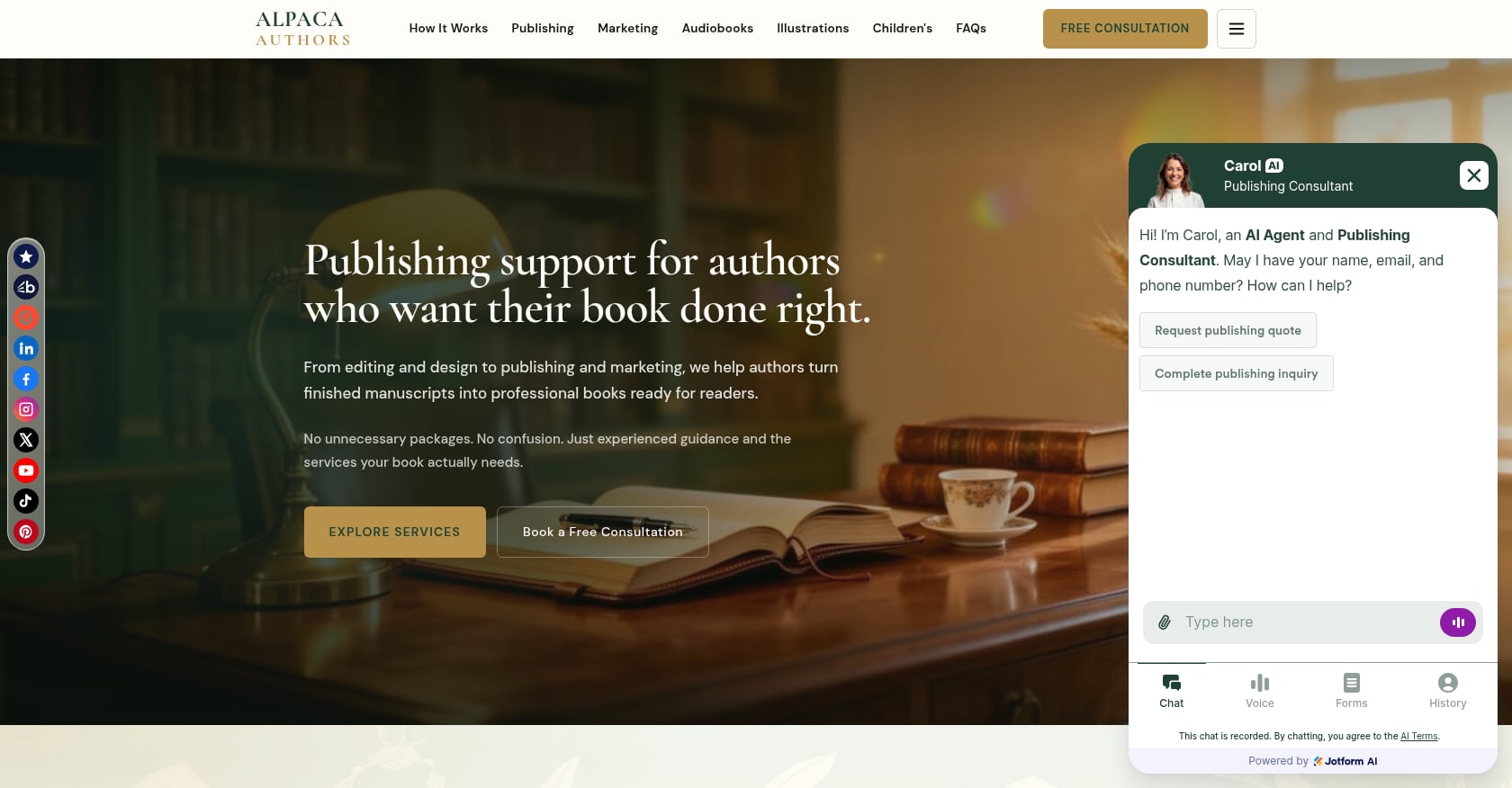
Best for: First-time and indie authors who want publishing, marketing, and audiobook production managed by a single team with upfront pricing.
Pricing:
- Publishing: $497 (The Pasture), $1,497 (The Herd), $3,497 (The Alpaca)
- Marketing: $997/mo (The Spark), $2,497/mo (The Surge), $4,997/mo (The Bestseller)
- Audiobook: $1,497 (The Foundation), $3,497 (The Standard), $6,997 (The Premium)
Key strengths:
- Integrated stack covering editorial, cover design, ISBN setup, distribution to 40+ platforms, Amazon ads, social campaigns, PR, email outreach, narrator casting, recording, mastering, and audiobook distribution to 45+ platforms.
- Authors retain full copyright and creative control.
- Upfront package pricing with no hidden fees or royalty splits.
- Free consultations available.
Tradeoffs:
- Boutique capacity may mean longer wait times during peak seasons compared to larger publishing factories.
- Not a traditional publisher (no advances); the author funds production and marketing.
- Multi-channel marketing results vary by genre, and testing cycles require patience.
- Audiobook timelines depend on narrator availability and platform QC.
Why it stands out: The biggest complaint practitioners share on Reddit and in author forums is vendor fragmentation. Hiring one editor, a separate designer, a different marketer, and yet another narrator creates coordination headaches that eat into time and money. Alpaca Authors solves this by bundling everything under one roof with named points of contact.
Explore book marketing plans to see how the tiers break down.
2. MindStir Media
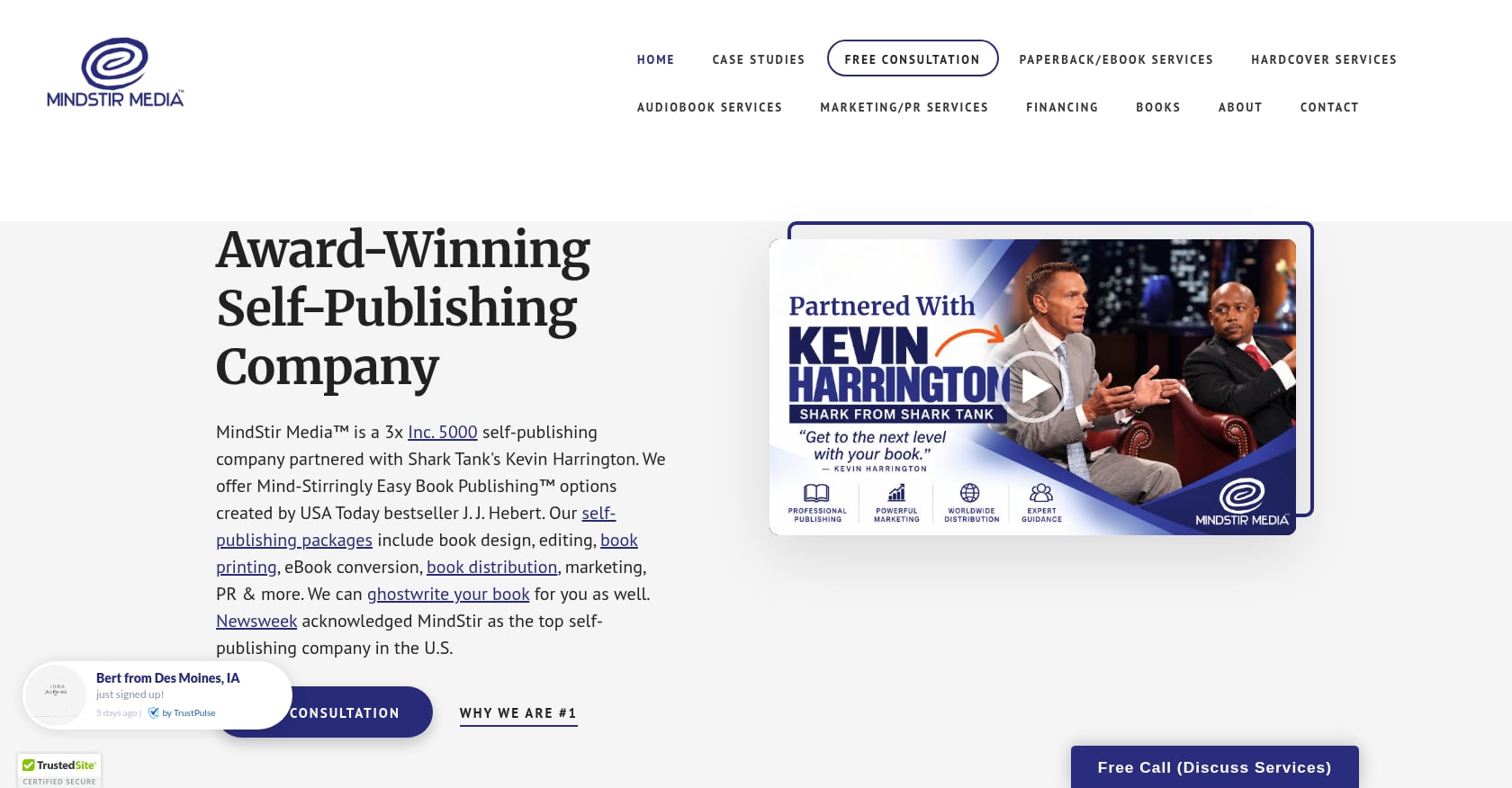
Best for: Authors who want full-service hand-holding with optional celebrity endorsement packages.
Pricing:
- Starting from $1,899 for design, publishing, barcode, and distribution.
- Three-month publicity campaign at $9,499.
- Highest package at $24,999, which includes an endorsement from Shark Tank’s Kevin Harrington.
Key strengths:
- True full-service model covering design, publishing, distribution, and marketing.
- Celebrity endorsement option that no other company on this list offers.
- Generally positive reviews on curated review sites.
Tradeoffs:
- Pricing climbs fast once you move beyond the base package.
- Distribution may not be as extensive as traditional publishing houses.
- The value of celebrity endorsements is debatable for most genres. A Kevin Harrington quote on a cozy mystery cover raises more questions than interest.
- Much of the marketing coverage is press-release-driven, which has limited impact on actual book sales.
User sentiment: Concerns raised across review sites include cost justification relative to results, limited distribution reach, and occasional quality concerns about editing and design. Authors should request sample work before committing.
3. BookBaby
Best for: Budget-conscious first-time authors who want modular, à la carte services.
Pricing:
- Ebook publishing starting at $299.
- Bookshop promotion bundle at $399 (includes placement as a new release, email marketing to 150,000+ buyers, and social media promotion).
- For ad campaigns, BookBaby suggests budgets of around $350/week across 6 to 8 weeks.
Key strengths:
- No royalty percentage taken. No rights taken.
- Modular pricing lets authors buy only what they need.
- Established brand with wide name recognition.
Tradeoffs:
- Marketing add-ons are consulting-oriented, not done-for-you campaign execution. You’ll get recommendations, not someone running your ads.
- No audiobook production services.
- Pricing has been criticized as opaque. One common complaint is that “pricing is opaque and the sticker price is not the real price,” meaning the total cost after add-ons exceeds what you’d expect from the advertised starting price.
- Since Amazon KDP is free, BookBaby’s publishing services are harder to justify on cost alone. If you’re comfortable with publishing on Amazon KDP, you may not need BookBaby’s publishing side at all.
PR and Publicity Firms
These firms focus exclusively on earned media: podcast interviews, newspaper features, blog coverage, and review placements. They don’t run ads, build websites, or publish your book.
1. Smith Publicity
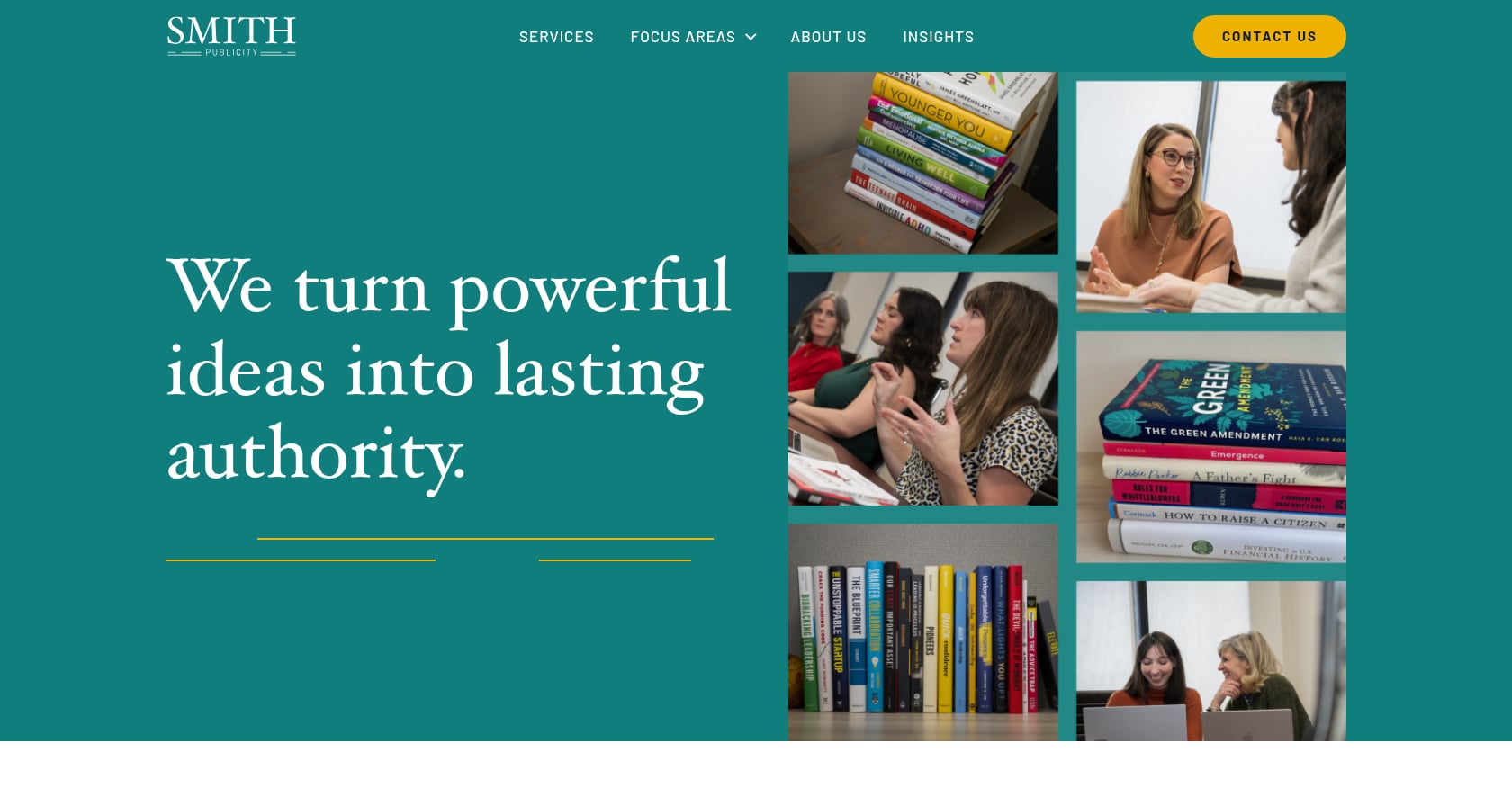
Best for: Nonfiction and business authors who have a strong news hook and want traditional media exposure.
Pricing:
- Pricing is not listed on the website; you must contact the firm directly.
- Per third-party sources, full campaigns typically run $12,000 to $30,000 or more, with a $5,000 floor for meaningful engagement.
Key strengths:
- Nearly 4,000 authors served with a client complaint ratio of less than 1%.
- Deep media rolodex built over decades.
- Strong fit for authors whose books tie into trending news topics, policy debates, or business thought leadership.
Tradeoffs:
- No paid ad management, no social media campaigns, no publishing services.
- PR alone doesn’t reliably move the sales needle for unknown debut fiction authors.
- As multiple authors have noted on Goodreads, “the data on book PR firms are sketchy at best as to if they increase book sales or not.” PR builds credibility, but credibility without discoverability rarely translates to units sold.
- At $12,000+, this is a significant investment that only makes sense if your book serves a broader business or speaking platform.
For context on what freelance publicists charge more broadly, 2026 market rates commonly land between $2,000 and $8,000 a month.
Freelancer Marketplaces
These platforms connect you with individual professionals. You hire a specific person for a specific task, not a company that runs your entire launch.
1. Reedsy
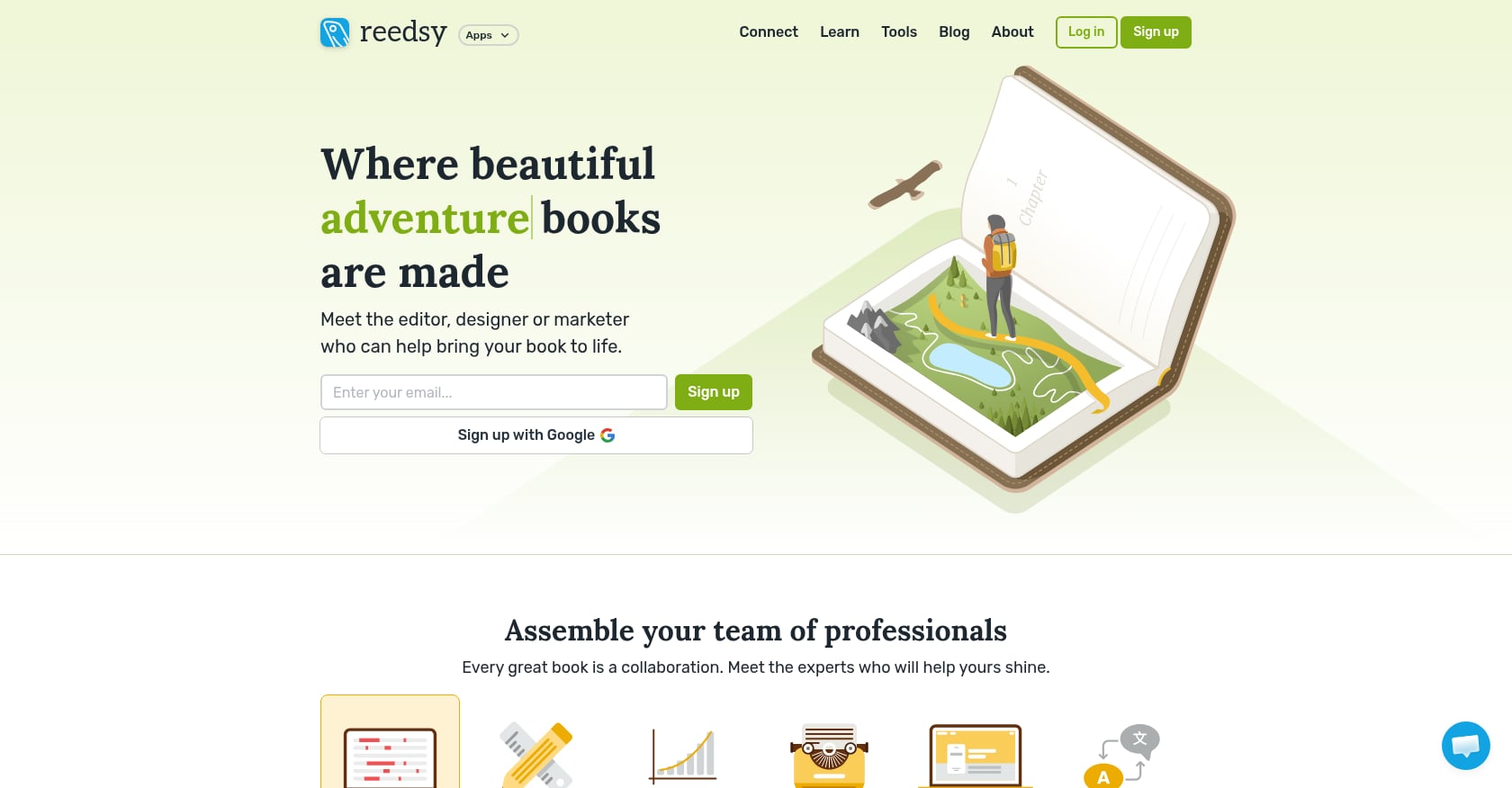
Best for: Authors who need a single specialist for a defined project (launch plan, ad setup, blurb optimization) and are comfortable managing the process themselves.
Pricing:
- Average marketing projects range from $570 to $1,320: metadata and blurb optimization around $570, advertising around $780, marketing strategy or email marketing around $910.
- Reedsy takes a 20% commission split evenly between buyer and professional.
Key strengths:
- Reedsy vets its marketplace, making it the lowest-risk way to hire an individual freelancer.
- Transparent project scoping and messaging system.
- Wide range of specialists beyond marketing, including editors, designers, and ghostwriters.
Tradeoffs:
- Not done-for-you. You manage the project, set milestones, and coordinate timelines.
- Quality varies by freelancer. A five-star metadata optimizer and a mediocre one look similar until you’ve paid.
- No integrated publishing or audiobook production. For a truly coordinated launch across formats, you’d need to hire and manage multiple freelancers separately.
- The 20% commission (10% from each side) means freelancers may price higher to offset the platform fee.
Premium Hybrid Publishers
These operate in the space between traditional publishing and self-publishing. They offer publishing infrastructure and distribution but charge the author upfront rather than offering advances.
1. Scribe Media
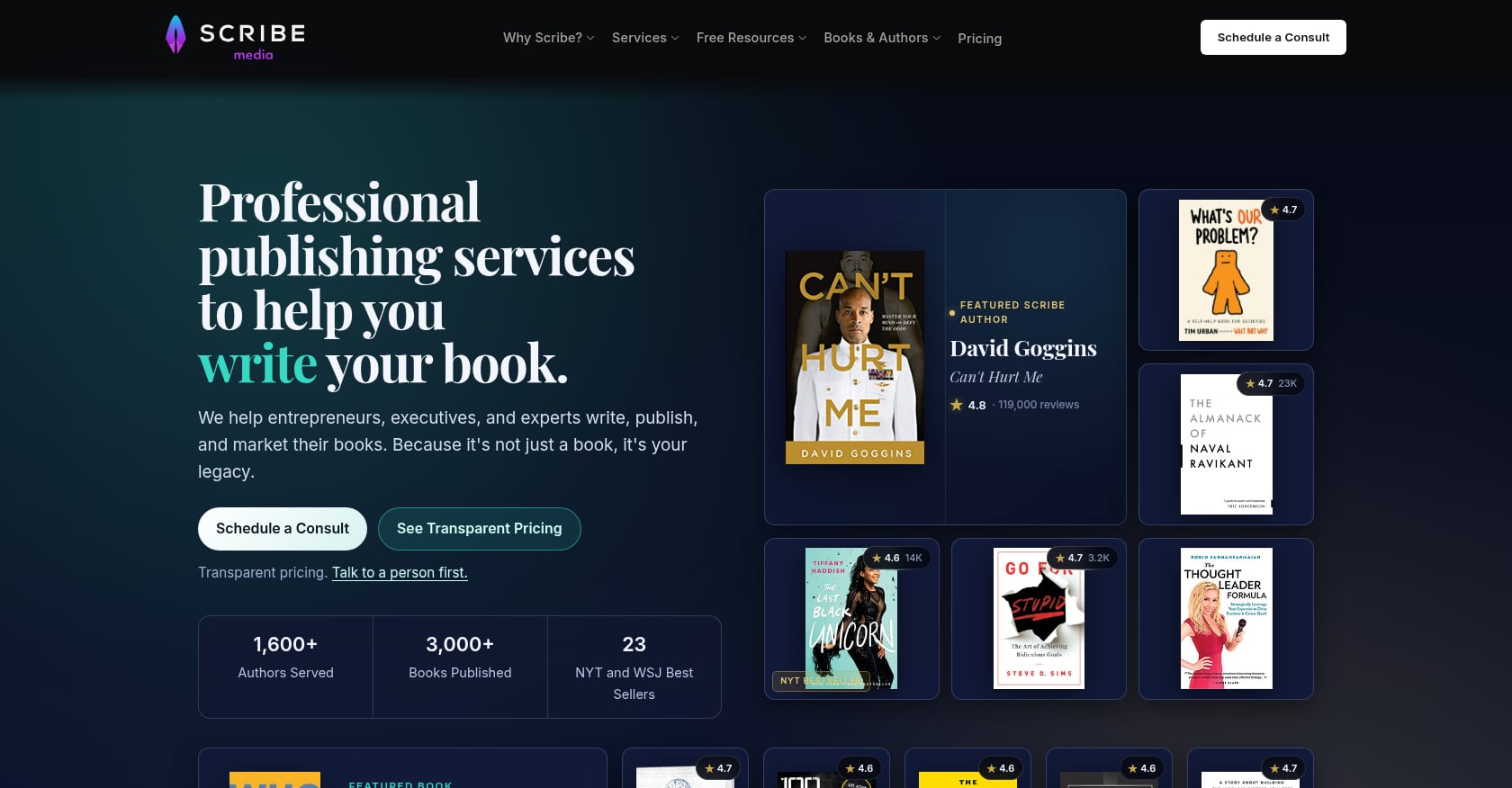
Best for: Executives, consultants, and thought leaders who plan to monetize a book through speaking fees, consulting, or brand credibility, not through book sales alone.
Pricing:
- $29,000 to $135,000 depending on how much writing the author does themselves. No royalty share taken.
- Marketing add-on packages start at $3,000 and are available only to Scribe-published authors.
Key strengths:
- Professional-grade nonfiction publishing process with editorial support.
- Strong track record with business and self-help authors.
- No royalty split, which matters for high-volume sellers.
Tradeoffs:
- Nonfiction only. Fiction authors and genre writers need not apply.
- Five-figure minimum puts this out of reach for most indie authors.
- Scribe Media collapsed in May 2023 following financial mismanagement. It has since been revived under new leadership and is actively publishing as of 2026, but the history warrants caution.
- Marketing is sold separately and only to Scribe clients, so it’s not a standalone launch service.
Promotional Platforms and Newsletter Sites
These aren’t companies you hire. They’re platforms you apply to or pay for placement on. They drive short-term visibility bursts, not sustained marketing.
1. BookBub
Best for: Fiction authors with a discounted or free book who want massive, short-term exposure.
Why it matters: BookBub Featured Deals are widely considered the most powerful promotional tool in self-publishing. Books reach millions of category-specific subscribers in a single email blast.
Key strengths:
- Unmatched reach among dedicated book buyers.
- Strong conversion rates because subscribers have opted into specific genre categories.
- Also offers a self-serve ad platform for authors who don’t get a Featured Deal.
Tradeoffs:
- Acceptance rates are estimated at 10 to 20%. Most applications get rejected, especially for debut authors without reviews.
- Requires a price discount or free offer to qualify for Featured Deals.
- This is a platform you apply to, not a service you hire. There’s no guaranteed placement regardless of budget.
- One-time visibility burst. Without a backlist or email marketing strategy, the spike fades quickly.
2. Written Word Media (Freebooksy / Bargain Booksy)
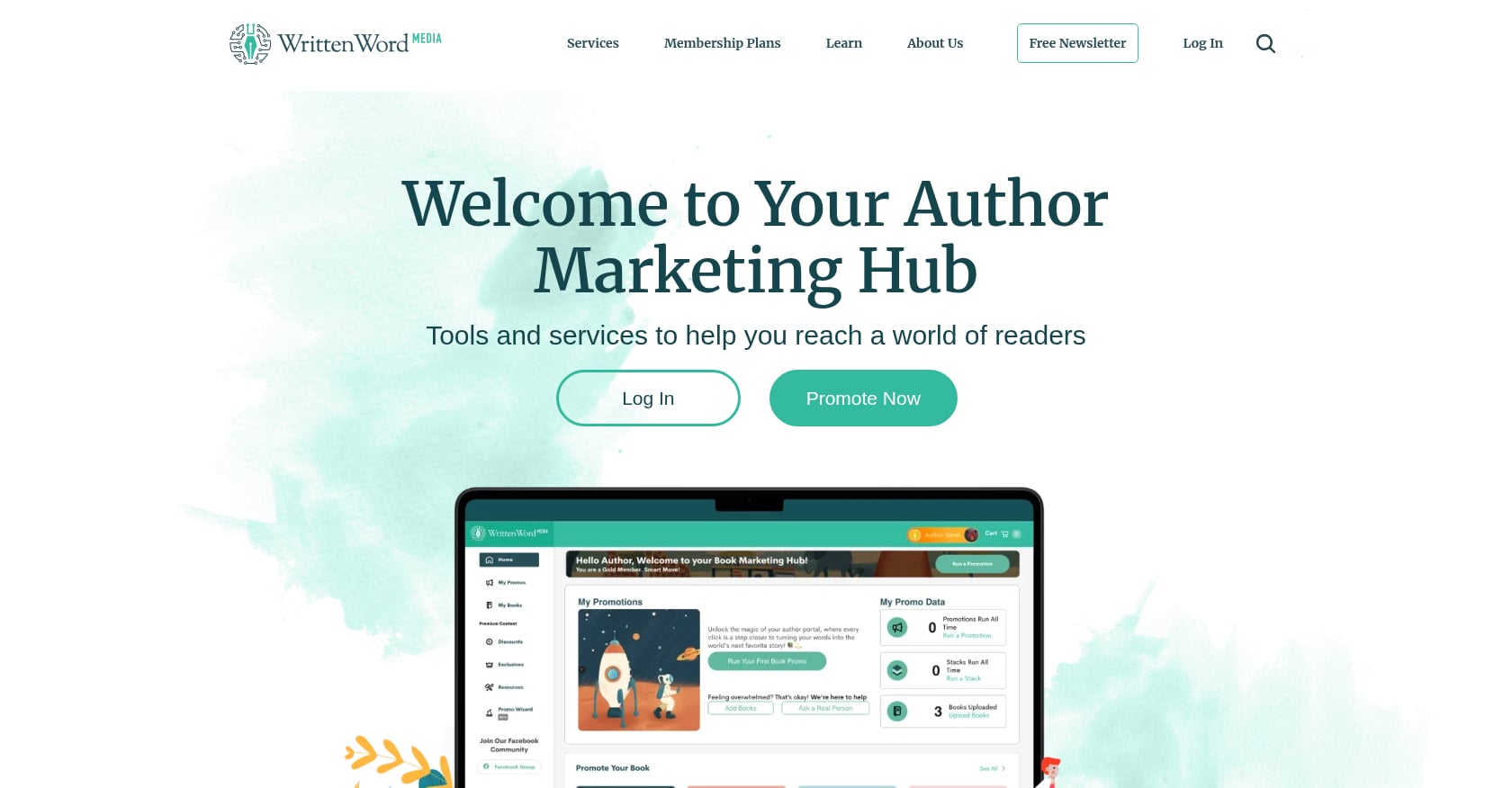
Best for: Launch-week and relaunch promo stacking when you need fast, affordable traction.
Pricing: $30 to $300 per placement depending on the site and category.
Key strengths:
- Much more accessible than BookBub. Lower barrier to entry for debut authors.
- Works well when “stacked” with other promo sites for cumulative visibility.
- Straightforward pricing with no long-term commitments.
Tradeoffs:
- One-time visibility spike, not sustained marketing.
- Requires a price discount or free offer to participate.
- Reach is significantly smaller than BookBub’s subscriber base.
- Best used as one piece of a larger launch strategy, not as the entire strategy.
For authors building a pre-launch review pipeline, NetGalley is worth mentioning here too. It’s an ARC (advance reader copy) distribution platform priced at $399 to $899 per book listing for six months. It helps generate early reviews before launch day but doesn’t drive direct sales.
Done-for-You Coaching and Strategy
1. Author Marketing Experts
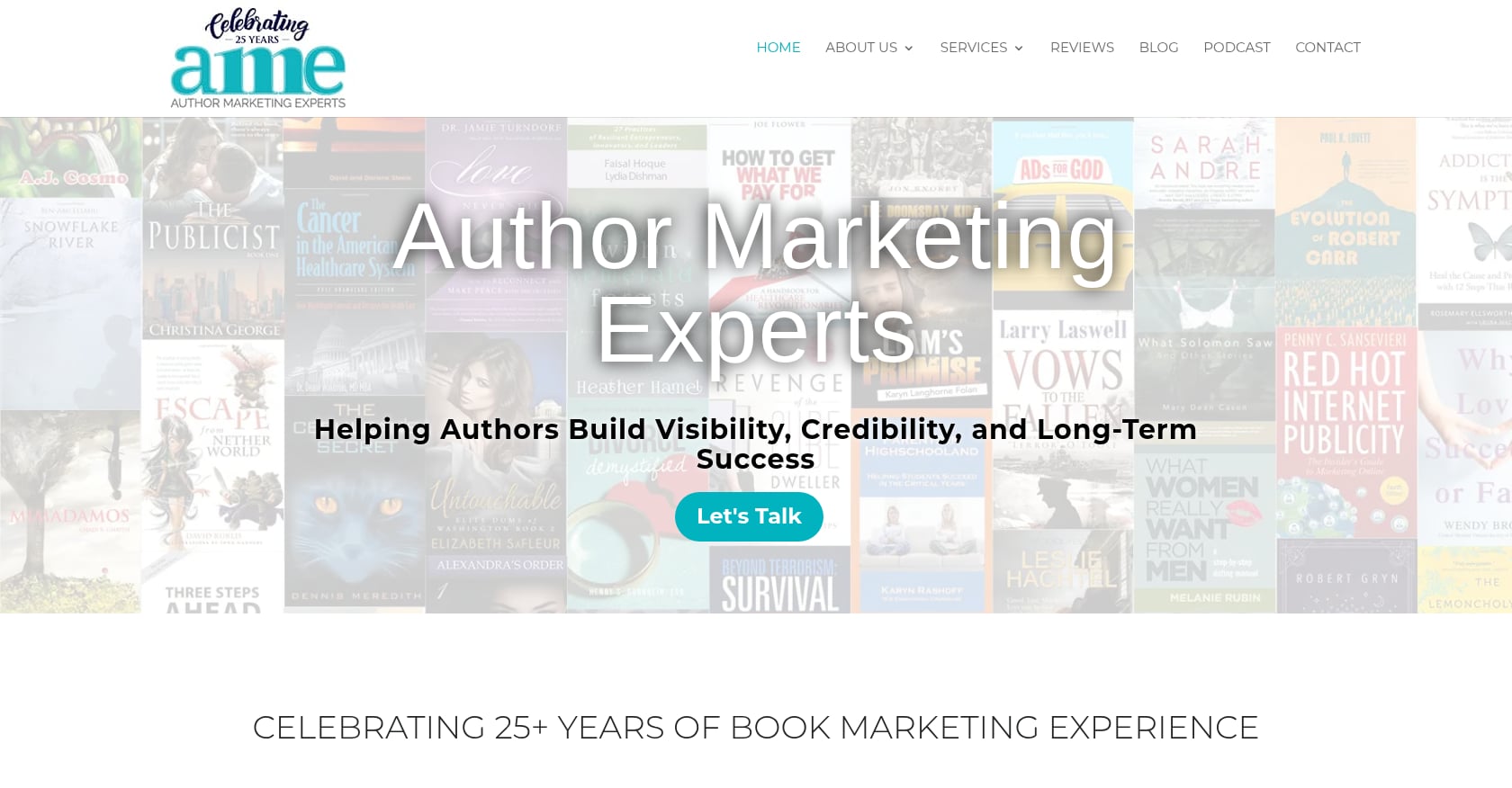
Best for: Authors with multiple titles who want long-term career growth and branding strategy, not just a single launch spike.
Pricing: $2,000 to $7,000 per engagement, focused on measurable results. No published rate card.
Key strengths:
- Over 25 years in the author marketing space.
- Career-oriented approach rather than launch-only thinking.
- Covers both fiction and nonfiction.
Tradeoffs:
- Quote-based pricing means you won’t know the cost until after a consultation.
- No publishing or audiobook services.
- Less suited for debut authors who need help with the fundamentals (formatting, distribution setup, cover design).
Red Flags: How to Spot a Bad Book Launch Company
The author community is vigilant about scams, and for good reason. One indie author shared on Goodreads: “I wasted money on scammy promotion sites, shouted into the echo chamber, and discovered that link dumping does little to reach real readers.” Another with eight years of self-publishing experience wrote about being “taken advantage of by so-called marketers that promise to help indie authors get sales.”
Watch for these warning signs:
- Guaranteed bestseller promises. No company can guarantee bestseller status. Amazon’s algorithm, reader demand, and timing are outside anyone’s control. Any firm promising a #1 ranking is selling you a fantasy.
- No published pricing or deliverables. If a company won’t tell you what you’re getting until after a sales call, that’s a deliberate opacity tactic. Compare this to companies like Alpaca Authors that publish book publishing packages with tier-by-tier pricing.
- Requiring publishing services to access marketing. Bundling is fine when both services add value. But if a company forces you to buy unnecessary publishing add-ons just to unlock the marketing you actually need, walk away.
- No clarity on rights retention. Before signing anything, confirm in writing that you retain your copyright, your ISBN (if you purchased it), and the right to distribute your book elsewhere. This is the bright line between self-publishing and vanity publishing.
- Fake reviews and testimonials. Cross-reference reviews across multiple platforms. If every testimonial sounds like marketing copy and appears nowhere outside the company’s own website, be skeptical.
For a deeper understanding of what publishing should actually cost, check this full budget breakdown to benchmark any quotes you receive.
When to Hire a Book Launch Company vs. DIY
Not every author needs a full-service firm. Here’s a simple decision framework.
DIY makes sense when:
- Your budget is under $500.
- You have time to learn Amazon ads, metadata optimization, and social media outreach.
- You’ve published before and understand what moves the needle in your genre.
- You’re comfortable managing multiple freelancers or platforms.
DIY marketing costs typically run $0 to $500 for tools and materials, while hiring specialists adds roughly $800 to $3,000 for a launch campaign.
Hiring a company makes sense when:
- This is your first book and you want a strong first impression. Debut authors benefit most from professional support.
- You’d rather spend time writing your next book than learning ad platforms.
- You want coordinated execution across formats (print, ebook, audiobook) without managing separate vendors.
- Your budget allows for at least $1,000 to $3,000 per month over a sustained period.
That last point matters more than most authors realize. Most authors stop marketing 30 days after launch. But Amazon’s algorithm explicitly prioritizes consistent post-launch conversion velocity over day-one sales spikes. A company that provides sustained campaigns (not just a launch-week burst) will outperform one that disappears after week one.
One practitioner on Reddit shared they’ve been running Reddit Ads for about a year, targeting subreddits related to their book’s subject at roughly $0.50 per click. The approach works when a high percentage of clickers buy and when backlist titles improve overall ROI. This kind of ongoing experimentation is exactly what sustained marketing looks like.
What to Ask Before You Sign
Before committing to any book launch company, get clear written answers to these questions:
- Do I retain full copyright and creative control? This is non-negotiable.
- What specific deliverables am I getting? “Marketing support” is vague. You need a list: number of ads, platforms targeted, email campaigns sent, review copies distributed.
- What’s the total cost, including add-ons and ad spend? Many companies quote a management fee but expect you to fund ad spend separately. Know the all-in number.
- What’s the timeline? Publishing timelines depend on editorial rounds and cover revisions. Marketing timelines depend on ad testing cycles. Audiobook timelines depend on narrator availability. Get realistic dates, not aspirational ones.
- What happens after the launch period ends? Do they provide a transition plan, hand over ad accounts, or just stop?
- Can I see examples of books you’ve launched in my genre? A company that excels at business books may flounder with epic fantasy. Genre expertise matters.
- Do you take any percentage of royalties? Some companies take a cut of your book sales indefinitely. Others charge flat fees and walk away. Know which model you’re agreeing to.
Choosing the Right Book Launch Company
The “best” book launch company depends entirely on where you are as an author. A debut novelist with a $1,000 budget and a CEO publishing a leadership book with a $50,000 budget are shopping in completely different markets.
For authors who want a single team handling publishing, marketing, and audiobook production with transparent pricing and full rights retention, Alpaca Authors is the strongest option on this list. It solves the vendor fragmentation problem that dominates complaints in author communities, and it does so at price points accessible to indie authors.
Book a free consultation with Alpaca Authors to discuss your launch.
For authors on tighter budgets, combining Reedsy freelancers with promotional platforms like Written Word Media can create a viable launch on $1,000 to $2,000. And for nonfiction authors with deep pockets and a media-ready hook, Smith Publicity remains the gold standard for earned media.
Whatever you choose, remember: general, unfocused visibility doesn’t sell books. Strategic positioning does.
FAQ
How much do book launch companies charge in 2026?
It depends entirely on the type of service. Promotional newsletter placements start as low as $30. Freelance marketing projects on Reedsy average $570 to $1,320. Full-service studios like Alpaca Authors start at $997 per month for marketing. PR firms like Smith Publicity start around $5,000 and can run $30,000 or more for a full campaign. Premium hybrid publishers like Scribe Media charge $29,000 to $135,000.
What’s the difference between a book launch company and a book publicist?
A book publicist focuses specifically on earned media: getting your book reviewed, landing podcast interviews, and placing stories in newspapers or magazines. A book launch company (especially a full-service one) covers a broader scope including paid advertising, social media, email campaigns, retail distribution, and sometimes publishing and audiobook production. PR is one piece of a launch; it’s not the whole thing.
Can I launch a book successfully without hiring a company?
Yes, but it requires time, skill, and willingness to learn. DIY marketing budgets for debut authors typically range from $500 to $2,000. You’ll need to learn Amazon ads, set up your Author Central page, build an email list, and coordinate promo site placements yourself. Authors with a few titles under their belt often find DIY more sustainable because they’ve already learned what works in their genre.
Should I include audiobook production in my launch strategy?
Audiobooks are the fastest-growing format in publishing, and launching across print, ebook, and audio simultaneously gives you the widest possible audience. Most book launch company listicles ignore audiobooks entirely, but a cross-format launch is now standard for authors who want to maximize revenue. Alpaca Authors offers audiobook production and distribution as part of its integrated service stack.
How do I know if a book launch company is a scam?
Look for guaranteed bestseller promises, no published pricing, pressure to bundle unnecessary services, and no clarity on rights retention. Cross-check reviews across multiple platforms rather than relying on testimonials on the company’s own website. Practitioners on Reddit report that roughly one-third of all self-publishing community conversation centers on visibility and sales, and scam avoidance is a persistent theme.
What rights should I retain when working with a book launch company?
You should retain full copyright, your ISBN (if self-purchased), and the right to distribute your book on any platform. You should also retain ownership of your ad accounts, email list, and any creative assets produced during the engagement. If a company asks for exclusive distribution rights or a percentage of lifetime royalties in exchange for marketing services, that’s a significant red flag worth investigating further.
How long should I keep marketing after my book launches?
Longer than you think. Most authors stop marketing 30 days after launch, but Amazon’s A10 algorithm prioritizes sustained post-launch conversion velocity over day-one sales spikes. A minimum of three months of active marketing is advisable, with ongoing maintenance for evergreen titles. This is one of the strongest arguments for hiring a company that offers sustained campaigns rather than a one-week burst.